Careers

Visual Arts Careers

Visual arts careers include studio practice, gallery work, exhibitions, education, production, technical installation, public art and arts management. This guide explains the main routes into paid work.
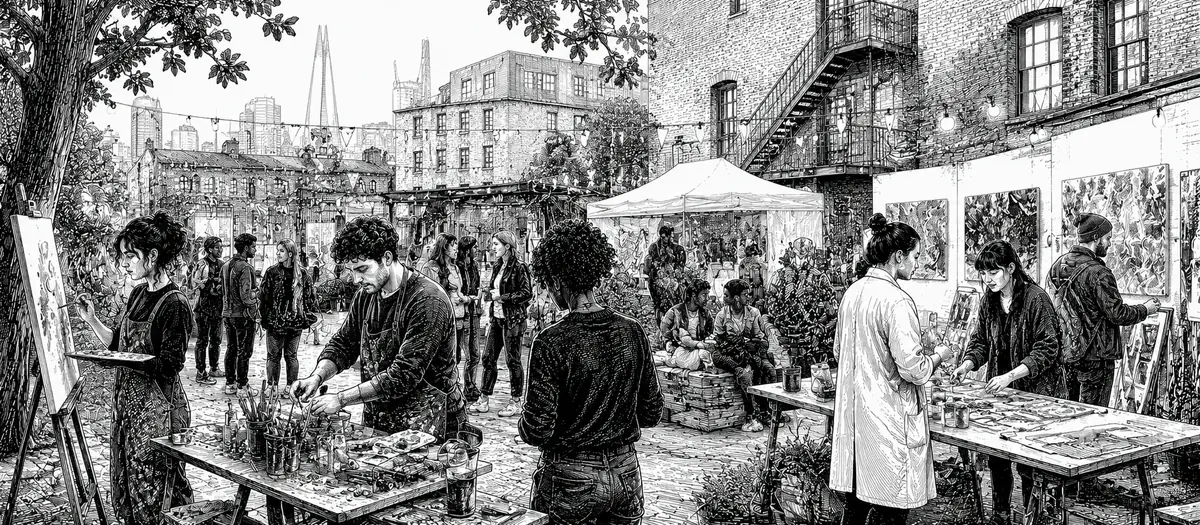
Black and white illustration of visual arts careers across studios, exhibitions and public art events

Sector Overview

The visual arts sector includes public galleries, commercial galleries, artist-led spaces, studios, public art projects, residencies, art fairs, education programmes and commissioning bodies. Careers often combine creative practice with employed, freelance or project roles.

Common work environments

  • Public galleries and arts centres with exhibitions, learning, visitor experience, curatorial and technical teams.
  • Artist studios, collectives and artist-led spaces where self-organisation, open calls and peer networks are important.
  • Commercial galleries, fairs and sales settings where client relationships, presentation and administration are central.
  • Public art, community arts and commissioning projects that involve partners, local authorities, fabricators and audiences.

What Jobs Exist In This Sector

  • Artist Develops a practice through exhibitions, commissions, residencies, teaching, sales, public art or participatory projects.
  • Curator Researches artists, shapes exhibitions, writes interpretation and manages relationships with artists, lenders and galleries.
  • Gallery assistant Supports visitors, invigilation, administration, exhibition changeovers, events, sales or learning activity.
  • Exhibitions technician Installs, lights, packs, moves and maintains artworks safely, often working closely with artists and curators.
  • Art handler Packs, transports and handles artworks with attention to condition, materials, insurance and installation requirements.
  • Learning producer Develops workshops, schools activity, talks or community programmes that help audiences engage with visual art.
  • Public programme coordinator Organises talks, performances, screenings, workshops and events that extend the exhibition programme.
  • Gallery manager Oversees staffing, budgets, operations, artists, sales or exhibition delivery depending on the gallery model.

Skills Employers Value

  • Portfolio development Artists and gallery applicants need concise evidence of work, context, scale, materials, dates and outcomes.
  • Artwork documentation Strong images, captions, dimensions, installation views and project notes help work travel beyond the studio.
  • Exhibition planning Galleries need people who understand install schedules, interpretation, lenders, artists, technicians and opening events.
  • Art handling and condition awareness Technical and gallery roles require careful packing, movement, installation and condition checking.
  • Public engagement Learning and programme roles turn exhibitions into workshops, talks, events and community activity.
  • Proposal and open-call writing Residencies, commissions and public art opportunities often depend on clear concepts, budgets, timelines and practical plans.

How To Get Into This Sector

  1. 1 Build a focused portfolio with strong documentation, concise project descriptions, exhibition history and links to relevant work.
  2. 2 Gain experience in galleries, studios, artist-led spaces, installation teams, public programmes or community arts projects.
  3. 3 Learn exhibition planning, art handling, interpretation, public engagement, risk assessment and proposal writing basics.
  4. 4 Track open calls, residencies, assistant roles, commissions, studio opportunities and local arts networks.

Career Progression

An artist may progress from local open calls and artist-led shows into residencies, commissions, public art projects, grants, funding applications or gallery exhibitions. Gallery assistants can move into exhibitions, learning, sales, curatorial support or gallery management, while technicians may specialise in installation, art handling, fabrication or exhibition production. Curatorial progression usually depends on research, artist relationships, exhibition delivery and public programme experience.

Current Visual Arts Jobs

Showing 5 of 18 current visual arts jobs.

View all Visual Arts Jobs

FAQs

Do visual artists need gallery representation to build a career?

No. Representation can help some artists, but many build careers through commissions, residencies, teaching, public art, artist-led spaces, grants and direct networks.

What entry-level gallery jobs are common in visual arts?

Gallery assistant, visitor assistant, exhibitions assistant, art handling support, learning assistant and administration roles are common starting points.

How do artists find paid visual arts opportunities?

Common routes include open calls, residencies, commissions, teaching, workshops, public art briefs, artist-led networks, gallery sales and project funding.

Do I need a fine art degree to work in the visual arts sector?

No. A fine art degree can help some artist and curatorial routes, but galleries, studios, public programmes and technical teams also value portfolios, exhibition experience, project work and practical skills.

Related Career Sectors

Museums Careers

Discover museum careers in collections, curation, conservation, learning, visitor experience, exhibitions and digital access.

Arts Education Careers

Discover arts education careers in creative learning, participation, schools programmes, community engagement and access.

Arts Administration Careers

Understand arts administration careers in operations, finance, marketing, fundraising, programming, HR and cultural management.