Careers

Museums Careers

Museum careers combine collections care, public access, research, interpretation, exhibitions, learning and visitor services. This page outlines the main job families and the experience that helps candidates move into museum work.
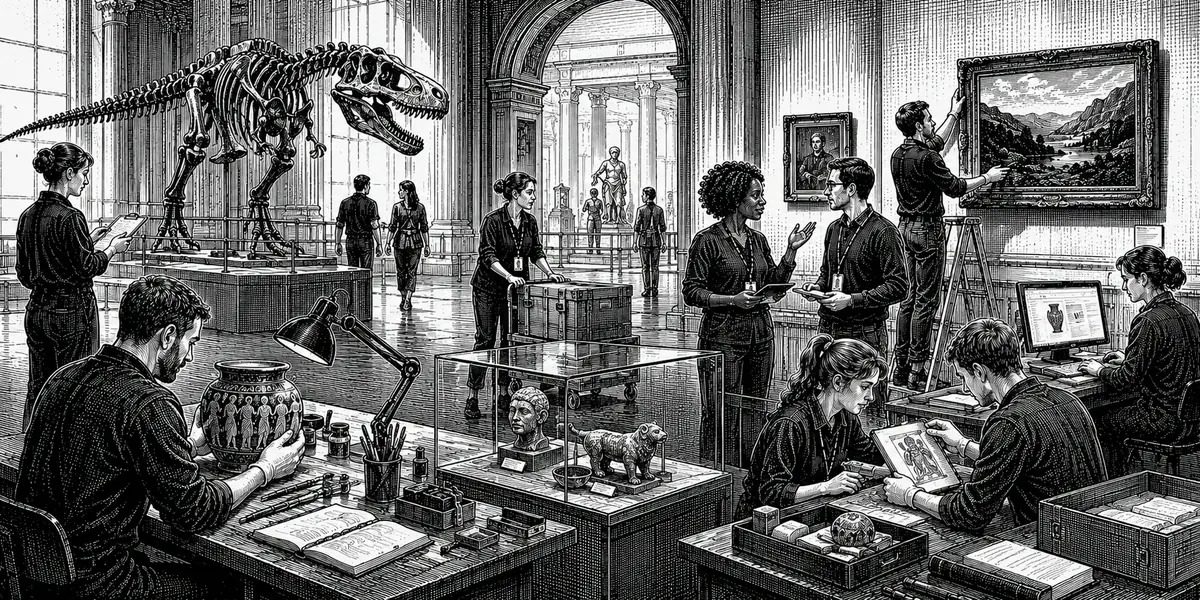
Black and white illustration of museum careers across collections, exhibitions and conservation work

Sector Overview

Museum careers sit across national museums, local authority museums, university collections, heritage charities, independent museums, archives and historic sites. Work may be collections-focused, public-facing, education-led, exhibitions-based, digital, commercial or operational, including digitisation, digital collections and online access projects.

Common work environments

  • Public museums and galleries with collections, exhibitions, learning, visitor experience and commercial teams.
  • University, specialist and local history collections where subject knowledge and documentation skills matter.
  • Heritage charities, historic houses and archive settings that combine conservation, interpretation and public access.
  • Project-funded exhibition, digitisation or collections roles that may run for a fixed period.

What Jobs Exist In This Sector

  • Curator Researches collections, develops interpretation, contributes to exhibitions and helps decide how objects are acquired, displayed and understood.
  • Collections assistant Supports object handling, documentation, loans, storage, audits and collections database work.
  • Conservator Assesses, treats and advises on the care of objects, often requiring specialist conservation training and careful record keeping.
  • Learning officer Designs workshops, school sessions, family activities and community programmes that connect audiences with collections.
  • Visitor experience assistant Welcomes visitors, supports access needs, answers questions, sells tickets or memberships and feeds audience insight back to teams.
  • Exhibitions coordinator Helps schedule installations, manage lenders, coordinate designers and track the practical delivery of exhibitions.
  • Digital content producer Creates online interpretation, collection stories, social content or digital resources that extend access beyond the building.
  • Museum operations manager Oversees staffing, safety, visitor flow, retail or facilities so the museum can open reliably to the public.

Skills Employers Value

  • Collections documentation Accurate records, locations, object numbers and condition notes are essential for collections care and access.
  • Object handling awareness Even entry-level roles benefit from understanding safe handling, storage, packing and movement of objects.
  • Interpretation writing Museums need clear labels, learning resources and digital content that make collections meaningful for different audiences.
  • Audience and access engagement Visitor, learning and community teams need inclusive approaches to schools, families, local communities and disabled visitors.
  • Exhibition coordination Exhibitions rely on schedules, loans, installers, designers, couriers, risk paperwork and clear internal communication.
  • Research accuracy Curatorial and collections work depends on checking sources, terminology, provenance and context carefully.

How To Get Into This Sector

  1. 1 Use volunteering, visitor experience shifts, front desk work or seasonal roles to understand museum audiences and daily operations.
  2. 2 Apply for traineeships, collections assistant posts, learning assistant jobs, exhibition project roles or digitisation contracts.
  3. 3 Develop evidence of object handling, documentation, research, interpretation, public engagement or collections database work.
  4. 4 Build relevant subject knowledge while learning practical systems such as collections databases, loans paperwork, ticketing tools and evaluation forms.

Career Progression

A museum assistant may progress into collections, learning, exhibitions or visitor experience roles depending on the evidence they build. Collections assistants can move into registrar, documentation or collections management posts, while exhibitions coordinators may progress into project management or programme delivery. Curatorial careers often require stronger subject expertise, exhibition credits, research output and evidence of working with collections responsibly.

Current Museums Jobs

Showing 5 of 23 current museums jobs.

View all Museums Jobs

FAQs

What qualifications do museums look for?

It depends on the role. Visitor experience, learning, digital and operations posts often value practical experience, while curatorial, conservation and specialist collections roles may ask for relevant subject knowledge or postgraduate training.

Is volunteering important for museum careers?

Volunteering can help, especially for collections and front-of-house experience, but paid visitor experience, education, archives, retail, administration or project work can also provide relevant evidence.

How do I move from visitor experience into collections work?

Look for chances to support documentation, object moves, audits, digitisation, exhibition changeovers or archive tasks, then record the systems, collections and responsibilities you handled.

What is the difference between a curator and a collections assistant?

A curator usually shapes research, interpretation, acquisitions and exhibition ideas, while a collections assistant focuses more on documentation, object movement, storage, audits and practical collections care.

Related Career Sectors

Visual Arts Careers

See how visual arts careers span artists, curators, gallery teams, technicians, educators, producers and arts administrators.

Arts Education Careers

Discover arts education careers in creative learning, participation, schools programmes, community engagement and access.

Arts Administration Careers

Understand arts administration careers in operations, finance, marketing, fundraising, programming, HR and cultural management.