Careers

Arts Education Careers

Arts education careers connect people with culture through workshops, schools programmes, community projects, participation work and learning resources. This guide explains the roles that help audiences, students and communities take part in the arts.
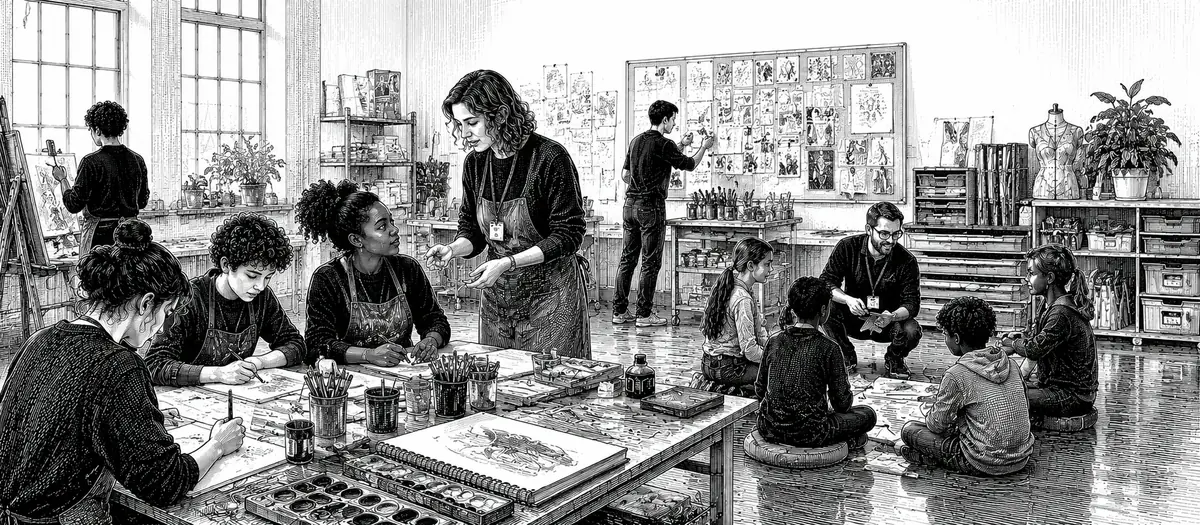
Black and white illustration of arts education careers across creative workshops, schools programmes and community participation

Sector Overview

Arts education careers sit across theatres, museums, galleries, music organisations, dance companies, festivals, arts centres, schools partnerships and community arts charities. Work often combines creative practice, safeguarding awareness, access and inclusion, curriculum links, evaluation and practical project delivery.

Common work environments

  • Venue learning departments that design workshops, tours, talks, family activity and schools programmes.
  • Community arts organisations that deliver participatory projects with young people, older people, disabled artists or local groups.
  • Schools, colleges and youth settings where artists and facilitators support curriculum-linked creative learning.
  • Festival, museum, gallery and performing arts programmes where access, inclusion and audience development shape participation work.

What Jobs Exist In This Sector

  • Learning officer Plans workshops, resources, school visits and audience activity that connect people with exhibitions, performances or collections.
  • Creative learning producer Develops participatory projects by coordinating artists, partners, budgets, safeguarding, evaluation and delivery schedules.
  • Arts educator Uses creative practice to teach or facilitate sessions in schools, venues, community settings or informal learning programmes.
  • Participation coordinator Organises workshops, youth companies, access projects and community activity so people can take part consistently.
  • Community arts worker Builds relationships with local groups and supports creative projects shaped around community needs and lived experience.
  • Workshop facilitator Leads practical sessions, adapts activities in the room and creates a safe environment for participants.
  • Schools programme manager Manages teacher relationships, school bookings, learning resources, evaluation and curriculum-linked activity.
  • Learning manager Leads a learning team, sets programme priorities, manages budgets and reports on reach, access and outcomes.

Skills Employers Value

  • Workshop planning Good sessions need clear aims, timings, materials, adaptations and a realistic plan for different group sizes.
  • Inclusive facilitation Learning teams value people who can adapt activities for age, confidence, access needs and prior experience.
  • Safeguarding awareness Work with children, young people and vulnerable adults requires appropriate boundaries, reporting routes and risk awareness.
  • Partnership coordination Arts education projects often involve schools, artists, youth workers, community groups, funders and venue staff.
  • Evaluation and reflection Funded learning programmes need participant feedback, attendance data, outcomes and evidence of what changed.
  • Creative learning design Strong programmes connect artistic content with practical activities, questions and resources that participants can use.

How To Get Into This Sector

  1. 1 Gain experience assisting workshops, youth theatres, museum learning sessions, gallery activities, community arts projects or school visits.
  2. 2 Build evidence of session plans, safeguarding awareness, access adjustments, participant feedback and partner communication.
  3. 3 Apply for learning assistant, participation assistant, community project coordinator or workshop support roles in venues and arts charities.
  4. 4 Develop a clear facilitation style while learning how schools, community partners, artists and venue teams work together.

Career Progression

An assistant facilitator may progress into workshop leadership, participation coordination or learning officer roles. Learning officers can move into creative learning producing, schools programme management, access and inclusion work or learning management. Experienced arts educators may build freelance portfolios across venues, schools and community partners, or move into programme strategy and team leadership.

Current Arts Education Jobs

Showing 5 of 14 current arts education jobs.

View all Arts Education Jobs

FAQs

Do I need a teaching qualification for arts education jobs?

Not always. Teaching qualifications can help for school-based routes, but many venue learning, participation and community roles value facilitation experience, safeguarding awareness, project delivery and evidence of working well with groups.

What is the difference between learning and participation roles?

Learning roles often focus on education activity, schools, interpretation and resources, while participation roles usually focus on people actively making, performing, discussing or co-creating work over time.

How do I get experience in arts education?

Assist workshops, volunteer with youth or community arts projects, support school visits, shadow facilitators, document session plans and gather feedback that shows how you worked with participants.

Related Career Sectors

Museums Careers

Discover museum careers in collections, curation, conservation, learning, visitor experience, exhibitions and digital access.

Theatre Careers

Learn about theatre careers in performance, production, stage management, technical teams, venue operations and audience services.

Visual Arts Careers

See how visual arts careers span artists, curators, gallery teams, technicians, educators, producers and arts administrators.