Careers

Dance Careers

Dance careers can be performance-led, teaching-focused, community-based, choreographic or production-oriented. Many professionals combine several strands of work to build a sustainable career.
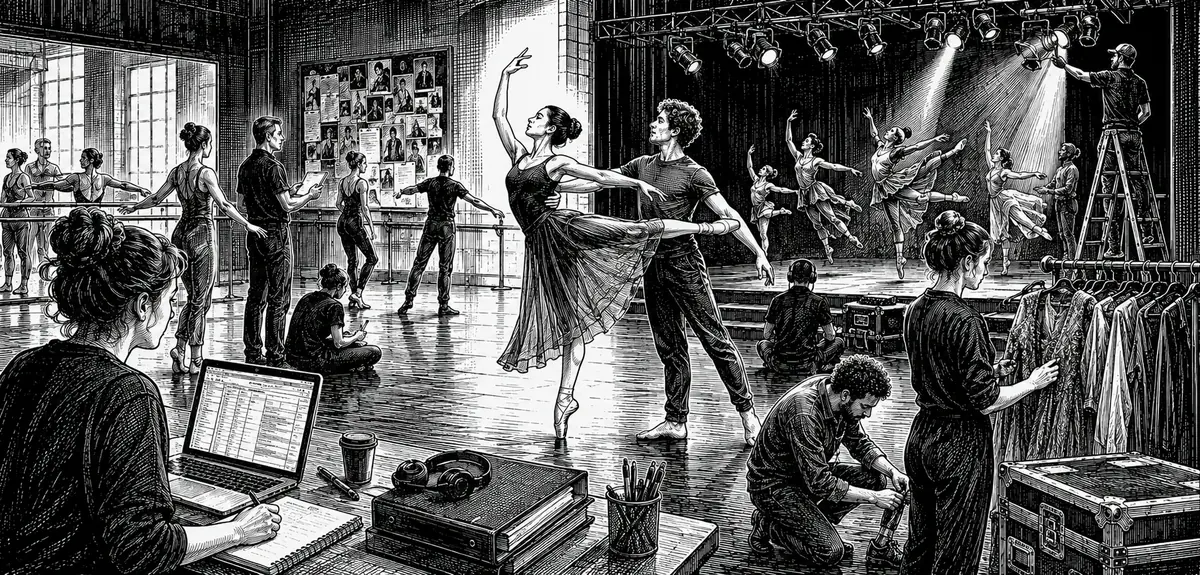
Black and white illustration of dance careers across rehearsal, performance and production work

Sector Overview

The dance sector includes contemporary dance, ballet, commercial dance, dance theatre, repertory and touring companies, independent artists, studios, conservatoires, schools, participation programmes, youth companies, festivals and community projects. Work is often project-based, so reliable networks, strong footage and evidence of facilitation or teaching can matter as much as job titles.

Common work environments

  • Dance companies and touring productions that recruit performers, rehearsal teams, producers and technical support.
  • Studios, schools and conservatoires where teaching, coaching and class cover create regular work.
  • Community dance, health, youth and participation projects that need safe facilitation and inclusive practice.
  • Festivals, artist residencies and self-produced projects where choreographers and producers build new work.

What Jobs Exist In This Sector

  • Dancer Performs choreographed or devised work in companies, tours, music videos, theatre, opera, events or independent projects.
  • Choreographer Creates movement material, directs dancers and shapes the physical language of performances, films or participation projects.
  • Dance teacher Plans and delivers classes for schools, studios, colleges or community groups, often adapting technique for different ages and levels.
  • Rehearsal director Maintains choreographic quality, leads rehearsals and helps dancers keep work performance-ready during remounts or tours.
  • Community dance practitioner Uses dance in participatory settings, including youth, health, disability, older people's or local community programmes.
  • Company manager Coordinates touring logistics, schedules, travel, contracts and communication between artists, venues and producers.
  • Creative producer Supports artists with funding applications, partnerships, budgets, project planning, touring and audience development.
  • Movement director Works with actors, singers or performers to shape physical performance for theatre, opera, screen or live events.

Skills Employers Value

  • Dance technique and body awareness Performers need consistent training, safe practice and enough physical awareness to adapt to different choreographers.
  • Choreographic interpretation Companies and artists value dancers who can retain material, respond to corrections and understand movement intention.
  • Inclusive facilitation Teaching and community roles require sessions that are safe, accessible and appropriate for the group.
  • Audition preparation Auditions often test learning speed, professionalism, stamina, musicality and how well someone works in a room.
  • Rehearsal reliability Being punctual, warmed up, prepared and responsive makes repeat casting and teaching work more likely.
  • Portfolio and footage selection Clear showreels, credits and teaching examples help employers understand style, level and suitability quickly.

How To Get Into This Sector

  1. 1 Train consistently through classes, conservatoire routes, intensives, youth companies or community dance programmes.
  2. 2 Attend auditions, open classes, workshops, scratch nights and local artist networking events.
  3. 3 Collect footage, performance credits, teaching plans, safeguarding certificates where relevant and references that show your practical range.
  4. 4 Use assistant teaching, class cover, facilitation, rehearsal support and project coordination roles to widen paid opportunities.

Career Progression

A dancer may progress from youth company or project work into ensemble contracts, then featured roles, rehearsal direction or movement direction. Teaching routes often move from assistant facilitation to regular classes, school work, community practice or course leadership. Choreographers may start with scratch nights or self-produced work, then build towards commissions, residencies, touring projects and producer-supported programmes.

Current Dance Jobs

Showing 5 of 5 current dance jobs.

View all Dance Jobs

FAQs

Can dance be a full-time career in the UK?

Yes, but many dance professionals combine performance, teaching, choreography, facilitation, producing and related arts work to create stable income.

What should a dance CV or portfolio include?

Include training, performance credits, choreographers or companies, teaching experience, specialist styles, facilitation experience, relevant certificates and links to clear footage where appropriate.

Do I need conservatoire training for dance work?

Some company and teaching routes favour formal training, but community dance, commercial work, independent projects and facilitation roles may also recognise strong experience, references and footage.

What careers are available in dance besides performing?

Dance careers also include choreography, teaching, community practice, rehearsal direction, producing, company management, participation work, movement direction and project coordination.

Related Career Sectors

Performing Arts Careers

Learn where performing arts careers sit across theatre, dance, music, live production, education and creative management.

Arts Education Careers

Discover arts education careers in creative learning, participation, schools programmes, community engagement and access.

Music Careers

Find music careers across performance, recording, live events, touring, artist development, education and venue programming.