Careers

Music Careers

Music careers span performance, recording, live events, teaching, artist development, venue programming and behind-the-scenes coordination. This guide explains how music work is organised and what experience helps people move into the sector.
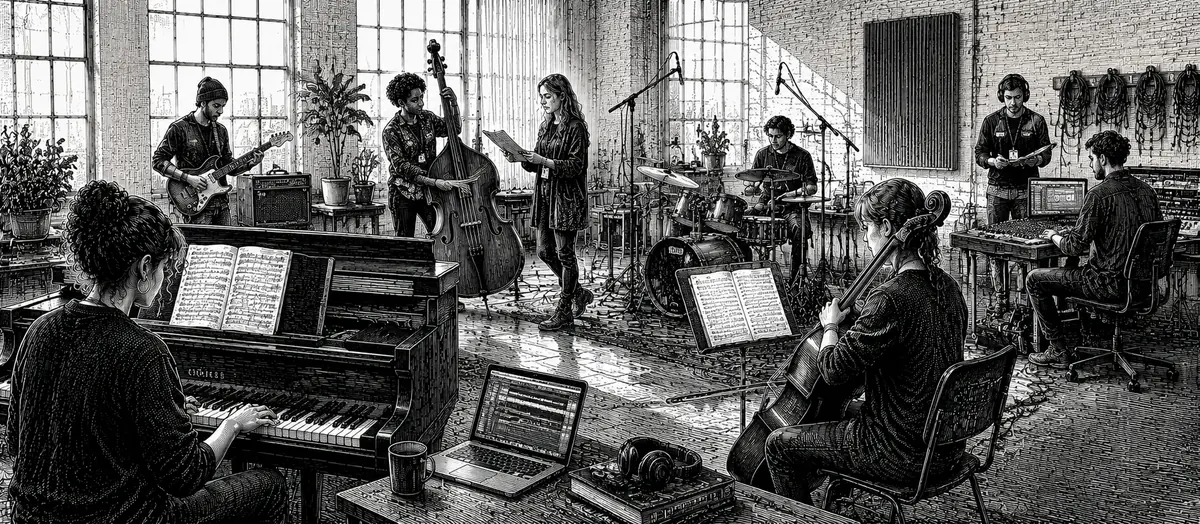
Black and white illustration of music careers across performance, recording, rehearsal and production work

Sector Overview

The music sector includes artists, orchestras, ensembles, studios, labels, managers, promoters, venues, festivals, education providers, community music projects and touring teams. Careers may be creative, technical, educational, commercial or operational, and many people combine freelance projects with employed roles.

Common work environments

  • Live music venues, festivals and touring circuits where programming, production, ticketing, marketing and artist liaison meet.
  • Studios, rehearsal rooms and production settings where musicians, producers, engineers and writers develop recorded work.
  • Orchestras, ensembles and music organisations that require performance, administration, learning and artist support teams.
  • Schools, community music projects and private teaching settings where music education and participation create regular work.

What Jobs Exist In This Sector

  • Musician Performs, records, rehearses or creates music for concerts, sessions, ensembles, theatre, education projects or self-led releases.
  • Music producer Shapes recordings by supporting arrangements, sound, sessions, editing decisions and collaboration between artists and engineers.
  • Music teacher Teaches technique, theory, ensemble skills or creative music-making in schools, private lessons, colleges or community settings.
  • Artist development coordinator Supports emerging artists with planning, showcases, mentoring, funding, releases, partnerships and professional development.
  • Orchestra manager Coordinates rehearsals, players, conductors, venues, schedules, touring details and communication for orchestral activity.
  • Music marketing officer Promotes gigs, releases, tours or programmes through listings, email, social content, press support and audience data.
  • Tour manager Manages travel, schedules, settlements, accommodation, venue communication and practical needs during a tour.
  • Venue programmer Books artists, balances audience demand with venue identity and works with promoters, agents and production teams.

Skills Employers Value

  • Musical craft and preparation Performance, teaching and session work depend on practice, reliability, listening and arriving prepared.
  • Live event coordination Music teams need people who understand soundchecks, stage times, advancing, hospitality, ticketing and audience flow.
  • Recording workflow awareness Studio and production roles benefit from understanding sessions, files, takes, edits, mixes and communication with artists.
  • Artist liaison Clear communication with musicians, agents, promoters, venues and crew keeps rehearsals, gigs and tours moving.
  • Audience and release marketing Marketing roles need listings, copy, assets, email, social planning and data that help music reach listeners.
  • Teaching and facilitation Music education work requires adapting material for age, ability, access needs and different learning settings.

How To Get Into This Sector

  1. 1 Build credits through gigs, recordings, youth ensembles, student productions, open mics, community music projects or assisting live events.
  2. 2 Apply for venue assistant, box office, promoter assistant, studio runner, marketing assistant, learning assistant or artist liaison roles.
  3. 3 Keep a clear record of releases, performances, audiences, equipment used, artists supported, sessions coordinated or tours assisted.
  4. 4 Learn how venues, promoters, agents, managers, producers, teachers and technicians work together around live and recorded music.

Career Progression

A musician may progress from local gigs, youth ensembles or session work into regular performance, teaching, touring or recording income. Venue assistants can move into programming, production, marketing or artist liaison, while studio runners may build towards assistant engineering, production coordination or music production. Artist development and orchestra administration routes often progress through coordinator, officer, manager and producer-level responsibility.

Current Music Jobs

Showing 5 of 37 current music jobs.

View all Music Jobs

FAQs

Can I work in music without being a performer?

Yes. Music also needs producers, engineers, teachers, programmers, marketers, artist development teams, tour managers, promoters, administrators and venue staff.

What careers exist behind the scenes in music?

Behind-the-scenes routes include artist liaison, tour management, venue programming, music marketing, studio support, orchestra administration, production coordination, ticketing and artist development.

Do I need formal music qualifications?

Formal training can help for some performance, teaching and technical routes, but practical credits, recordings, live event work, references and a clear portfolio can also be important.

Related Career Sectors

Festival Careers

Understand the roles that bring festivals to life, from programming and production to artist liaison, ticketing and site teams.

Performing Arts Careers

Learn where performing arts careers sit across theatre, dance, music, live production, education and creative management.

Arts Education Careers

Discover arts education careers in creative learning, participation, schools programmes, community engagement and access.