Careers

Theatre Careers

Theatre careers bring together performers, makers, technicians, producers, participation teams and venue staff to create live work for audiences. This guide explains where jobs sit in the UK theatre sector and how to build credible experience.
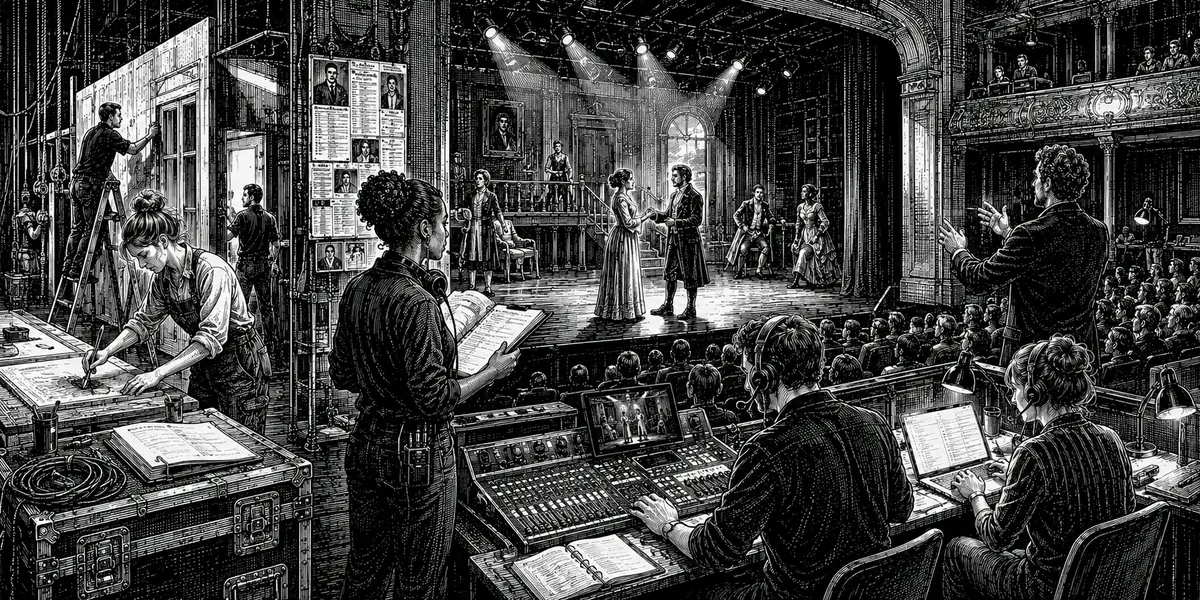
Black and white illustration of theatre careers across backstage, technical and onstage production work

Sector Overview

Theatre careers exist across producing theatres, receiving houses, touring productions, fringe companies, commercial productions and community theatre projects. Some people are employed by venues year-round, while many creative and technical specialists move between rehearsals, fixed-term productions, transfers and tours.

Common work environments

Theatre careers can be found in a wide range of organisations, from local community projects and fringe venues to major commercial productions.

  • Producing theatres that make their own shows and employ creative, technical and producing teams.
  • Receiving houses and arts centres that programme touring work and need venue operations, marketing and audience teams.
  • Fringe, community and youth theatre projects where early credits and practical responsibility are common.
  • Commercial productions and tours that recruit performers, stage management, technical crew and company management.

What Jobs Exist In This Sector

  • Actor or performer Interprets text, movement or devised material in rehearsal and performance, often moving between auditions, short contracts and self-generated work.
  • Stage manager Keeps rehearsals, props, cues, paperwork and backstage communication organised so the production can run consistently.
  • Producer or assistant producer Coordinates budgets, schedules, contracts, partners and delivery so a production or programme can happen.
  • Director or assistant director Shapes the creative interpretation of a show and works with performers, designers and stage management during rehearsal.
  • Lighting, sound or video technician Installs, operates and maintains production systems for performances, tours, festivals and venue programmes.
  • Set, costume or prop maker Builds and adapts physical production elements from design drawings, fittings, research and rehearsal needs.
  • Front of house or box office manager Manages audience welcome, ticketing, access requirements, customer service and performance-day operations.
  • Theatre marketing or development officer Builds audiences, manages campaigns, supports press activity or helps raise income through donors, trusts and partners.

Skills Employers Value

  • Rehearsal discipline Arriving prepared, taking notes accurately and adapting quickly keeps rehearsal time productive.
  • Cue and show-call awareness Understanding cues, calls and running paperwork helps performers, stage management and technicians work safely together.
  • Backstage communication Clear, calm communication matters during get-ins, technical rehearsals, performances and touring handovers.
  • Technical rehearsal readiness Knowing how lighting, sound, set, costume and stage management interact makes production weeks more efficient.
  • Audience and access awareness Venue teams need people who understand front-of-house flow, access needs and audience care.
  • Touring or venue operations Touring work depends on practical knowledge of schedules, load-ins, venue communication and repeatable show delivery.

How To Get Into This Sector

  1. 1 Join youth theatre, community productions, student shows, fringe work or amateur companies to gain practical credits.
  2. 2 Apply for usher, box office, venue assistant, trainee technician, wardrobe assistant, production runner or assistant stage management roles.
  3. 3 Build a focused CV, portfolio, prompt-book example, technical log or showreel that matches the discipline you want to pursue.
  4. 4 Learn how rehearsal rooms, technical rehearsals, get-ins, press nights and touring schedules work so you can talk credibly about production process.

Career Progression

Progression usually comes from building stronger credits, moving from assistant to lead responsibility, and developing trusted relationships with venues, producers and companies. An assistant stage manager might progress to deputy stage manager and then company stage manager, while a technician may specialise in lighting, sound, automation or production management. Front-of-house staff can also move into box office, visitor experience, operations or venue management.

Current Theatre Jobs

Showing 5 of 53 current theatre jobs.

View all Theatre Jobs

FAQs

Can I work in theatre without being an actor?

Yes. Theatre also needs stage managers, technicians, producers, designers, makers, marketers, fundraisers, participation teams, box office staff and venue managers.

Do theatre careers always require drama school training?

No. Drama school or technical training can help for some routes, but practical credits, venue work, placements, assistant roles, portfolios and strong references are also recognised ways into theatre.

Are theatre jobs mostly freelance?

Many creative and production roles are freelance or contract-based. Theatres also employ permanent teams in operations, marketing, fundraising, finance, participation and venue management.

What are the best entry-level theatre jobs?

Front of house, box office, venue assistant, production runner, trainee technician and assistant stage management roles are practical starting points because they build venue knowledge and production awareness.

Related Career Sectors

Performing Arts Careers

Learn where performing arts careers sit across theatre, dance, music, live production, education and creative management.

Arts Education Careers

Discover arts education careers in creative learning, participation, schools programmes, community engagement and access.

Arts Administration Careers

Understand arts administration careers in operations, finance, marketing, fundraising, programming, HR and cultural management.